Udderly Exhausted: Understanding Heat Stress on Dairy Cattle and What to Do About It

What is heat stress?
Heat stress occurs when cows suffer from high temperatures in combination with high humidity which in turn negatively impacts their health, productivity, and fertility. This happens when they generate and absorb more heat than they can easily rid themselves of (through sweating, respiration, and wind/fans blowing on them). Heat stress occurs both outside and inside, and you’ll typically notice that heat-stressed cows are breathing faster, have increased body temperature, are standing more, and sweating more.
Why is this important?
When cows experience heat stress, they are affected in numerous ways. First, their immune system takes a hit, causing them to be more susceptible to infection and a variety of diseases. Next, their dry matter intake, milk production, and fertility rates drop. Additionally, we see that lameness issues, days open, and death rates increase. Even just one of these issues leads to a loss in profit as your cows are under stress and not performing well.
Heat stress affects not only affect the lactating cow, but also dry cows. Heat stressed cows during the dry period have been shown to have reduced milk production during the next lactation. Furthermore, it is advised to cool calves and replacement heifers as their immune systems are suppressed during the heat as well. Looking out even further at long-term effects, recent studies have shown that the calf in utero can be affected by heat stress, producing less milk if their dam was not cooled during the heat verses the calf whose dam was cooled.
How to know when cows are heat-stressed?
Cows exhibit heat stress in many ways. Panting/elevated respiration rates, excessive drooling/foaming at the mouth, bunching, standing, and crowding around water troughs are common sights to see in cows experiencing heat stress. You will also observe reduced dry matter intake and lower milk production. High-producing cows can begin to feel heat stress, even in a well-ventilated barn, when the temperature is just 65°F.
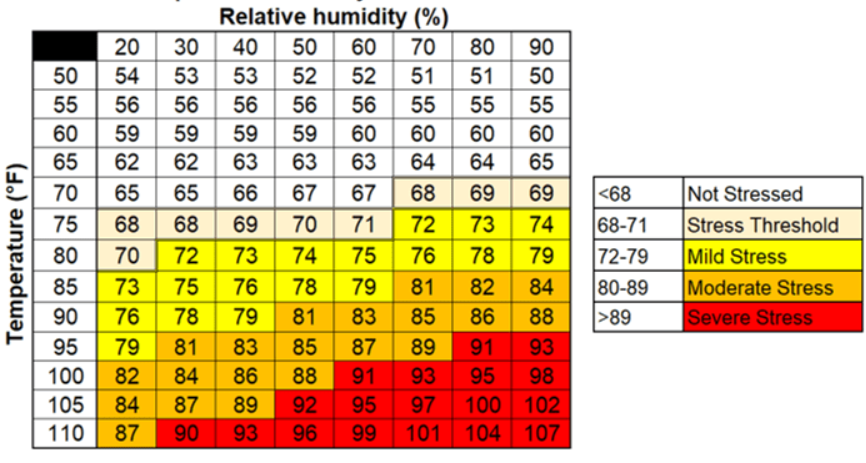
Temperature Humidity Index (THI) is the metric used to measure the risk for heat stress in livestock. THI is commonly used in the dairy industry and combines the air temperature (in degrees Fahrenheit) and relative humidity (%) to determine the level of heat stress that cattle experience. Below is a chart showing the THI values for specific temperatures and humidity levels. When the THI is above 68, cows are at risk for heat stress.
Steps you can take to minimize heat stress:
There are many ways that you can help your cows combat heat stress. With the goal in mind of keeping them comfortable during the heat, you will see less drastic effects of heat stress- keeping your cows as healthy and productive as possible.
-Ensure adequate shade. This specific recommendation varies depending on your local climate and structures/facilities. This step more-so applies to grazing herds and herds that have access to the outside. The goal is to prevent cows being in excessive direct sunlight.
-Use sprinklers or misting systems. Cooling with water can be very beneficial for the dairy cow. This will only work well if there is adequate ventilation to promote evaporative cooling, as both methods tend to increase the air’s relative humidity. Remember to maintain dry bedding as much as possible to reduce mastitis risk. Also, holding areas can be outfitted with sprinklers or misters to cool the cows as they are waiting to be milked.
-Use those fans! Be sure your fans are working correctly and mounted to point down towards the cows in the stalls. Additionally, cross and tunnel-ventilated dairy barns help to combat heat stress by having continuous air exchange and air flow over the cows. Proper ventilation is extremely important in keeping cows comfortable in the barns! And, like mentioned above, fans combined with soaking gives a greater cooling effect. Having fans in the holding area is another way to increase cow comfort as well.
-Maintain adequate drinking water. This one speaks for itself. Cows rely on hydration to regulate body temperature in the heat. With cows naturally bunching around waterers when the heat arises, we want to encourage drinking and have plenty of fresh water available. In hot weather, consider increasing water space. Be sure the water troughs are kept fresh and clean.
-Consider feeding cows more frequently or during cooler parts of the day. Feedings should be scheduled for early morning and later in the evening to avoid peak heat during the day. Dropping feed more often in smaller batches allows the TMR to stay fresh and prevent heating at the bunk. Remember to keep feed pushed up frequently for accessibility and to encourage cows to eat. Consult with your nutritionist for further guidance on this matter.
-Feed additives that support the immune system. Talk with your nutritionist to see if there is a product that can be added to your cows’ diet to increase immune cell function. This may provide additional support for heat-stress and would best work when the other above measures are already in place.
Keeping cows comfortable provide many benefits to not only the cow, but your opeation as well. Heat stress mitigation strategies are highly encouraged to be used, as together they will promote longer lying times and allow cows to rest better. Because of this, you’ll see improved feed intake, better overall health, improved reproduction, and reduced loss in milk production. By understanding the affects of heat stress on your herd and taking proactive action steps to minimize heat stress, you can feel good about knowing that you are protecting the health and profitability of your herd. Which of the above actions can you implement today to help mitigate the effects of heat stress?